Articulating RUBBISH
Titled in full as Articulating Rubbish: A Sociolinguistic Approach to the "Crisis of Waste", this four-year project is funded through a Swiss National Science Foundation grant (# 100015_215102) running from 2023 to 2027.
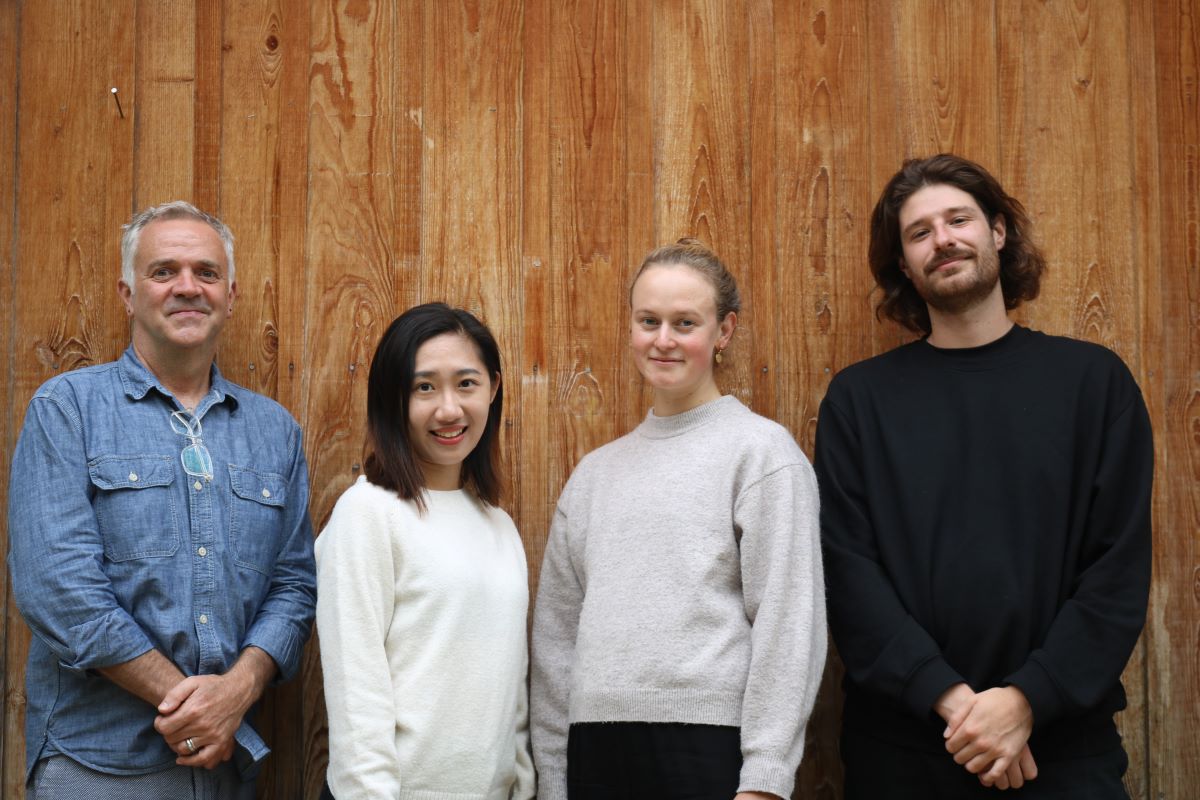
In addition to Crispin Thurlow as PI, the team includes three doctoral researchers: Charmaine Yik Lam Kong, Laura Wohlgemuth, and Alessandro Pellanda. Our work is also supported by a part-time student administrator Alexandra Birrer (who took the team photo below) and four international consultants: Giorgia Aiello (Milan, Italy), Rodney Jones (Reading, UK), Jillian Cavanaugh (CUNY, USA) and Joshua Reno (Binghamton, USA).
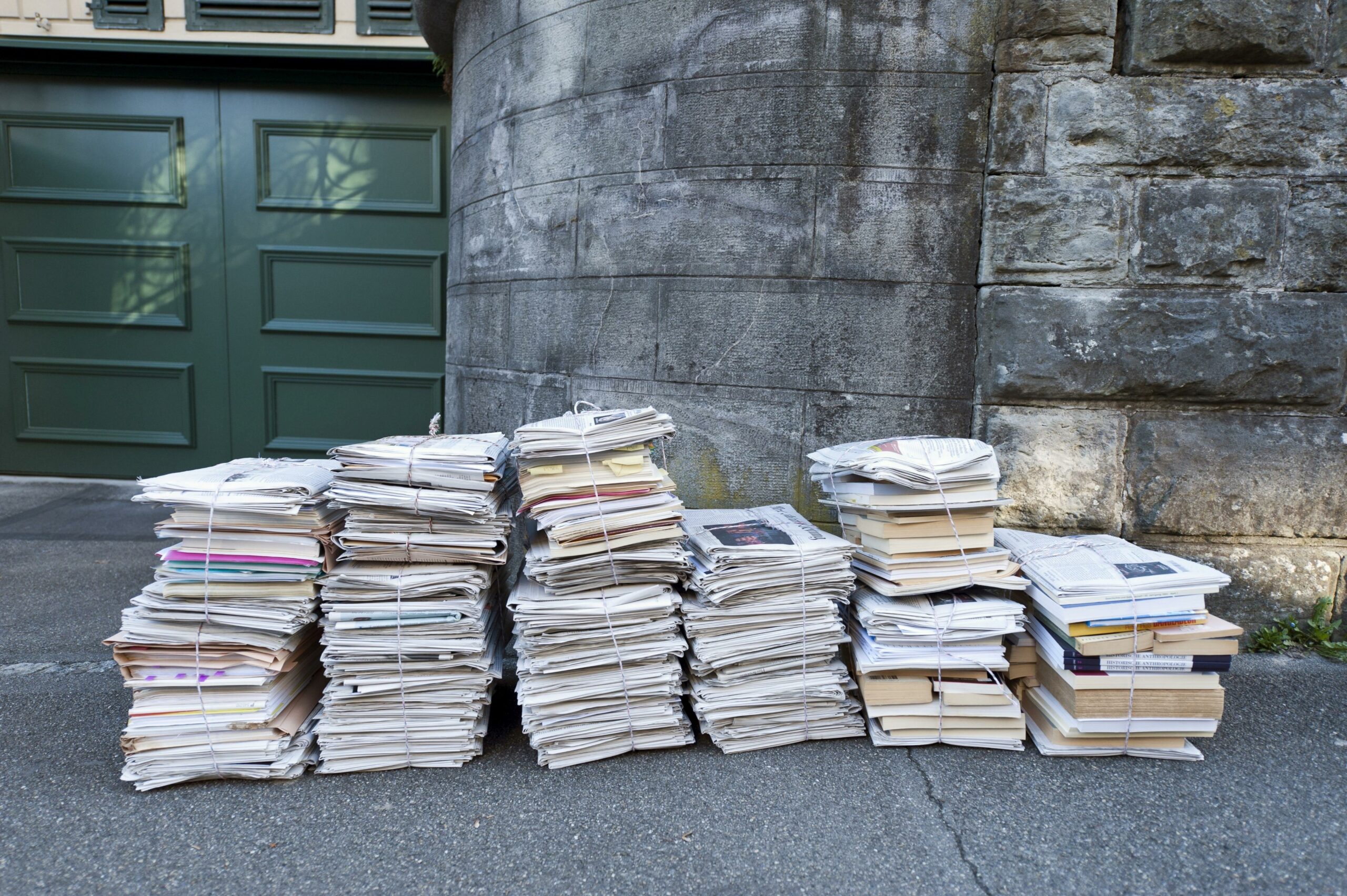
 Whether we call it trash, garbage, junk, refuse, detritus, or just rubbish, waste is undoubtedly a matter of major concern: “With approximately 1.3 billion tonnes of municipal waste generated each year … urgent action is needed to head off the threat to the environment and human health posed by this global waste crisis.” (UNEP, 2012). In this regard, as one of Europe’s largest municipal waste producers, Switzerland also plays its own special role.
Simply put, the Articulating Rubbish project asks the following question: what is the role of language in this “crisis of waste”? We know, for example, that language plays a powerful role in naming and categorizing the world around us. It is in this way that words not only help define what waste is and isn’t, but also help produce, maintain, and regulate the everyday practices of waste-making – both small-scale and large-scale.
The Articulating Rubbish project is organized around four interrelated sub-projects each addressing a different cultural site:
- mediatization and institutional discourses (Thurlow);
- public space and waste as a communicative resource (Pellanda);
- domestic life and the discursive production of value (Wohlgemuth);
- “elsewhere” and the social lives of/in waste (Kong).
While the first three sub-projects focus primarily on the Swiss context, the fourth provides an essential transnational perspective from beyond Europe.
Media
Thurlow, C. (2026, May). Behind the facade of sustainability: What do waste images conceal? / Hinter der Fassade der Nachhaltigkeit: Was verbergen Bilder von Abfall? Blog posts for the Centre for Development and Environment (CDE), University of Bern.
Sprechen wir über Abfall! (Let's talk rubbish!) Feature article (2023, November) in UniAktuell, University of Bern.
Mediatizing Waste - Geomedia Studies Podcast (2026, March)
Let's talk rubbish | Wenn der Abfall zur Sprache kommt – uniFocus magazine University of Bern (2026, March)
Related publications
Wohlgemuth, L., & Lüthi, J. (2026). Cellars as heterotopias: Domestic storage and the discursive-material politics of value. Critical Discourse Studies.
Wohlgemuth, L. (in press). Show me your fridge! Language materiality and the ‘micropolitics’ of domestic food waste. In M. Moriarty & G. Mapes (eds), The Routledge Companion to Language and Food. Routledge.
Thurlow, C., Kong, C., Pellanda, A. & Wohlgemuth, L. (in press). Mapping “sacrifice zones”: The semiosis of coloniality in waste discourse. In G. Mapes & Z. Lehmann (eds), Listening to African Englishes: Perspectives from Linguistics and Literary Studies. Winter Verlag.
Kong, C. (2026). Feeling clean: Language materiality and the discursive production of value in hotel ‘laundry routes’. Language in Society.
Pellanda, A. (2026). Reading a waste-to-energy plant as spatial text: The semiotics of erasure in waste design. Multimodality & Society, 6(1), 67–92.
Thurlow, C. (2026). Designing (dis)engagement: Reading the Throwaway waste exhibition as a spatial text. Space and Culture.
Thurlow, C. & Lang, A. (2025). Packing a punch: Disposal labelling, waste regimes, and symbolic violence. In G. Westberg (ed.), Meaning in Motion: Studies in the Semiotics of Social Life (pp. 83-101). Örebro University Press.
Thurlow, C. (2025). Engaging the stuff of words: Language materiality and symbolic power. Educational Linguistics.
Thurlow, C. (2025). Seeing through sustainability and the wasteful rhetorics of (un)knowing. In M. Kosatica & S.P. Smith (eds), Framing Sustainability in Language and Communication (pp. 259-273). Routledge.
Pellanda, A. (2024). Garbage day as dispositive and semiotic landscape: A visual essay. Linguistic Landscape.
Thurlow, C. (2023, June). El lenguaje del desecho. Blog post for En voz alta (La Asociación de Estudios del Discurso y Sociedad, EDiSo).
Thurlow, C. (2022). Rubbish? Envisioning a sociolinguistics of waste. Journal of Sociolinguistics.
Thurlow, C., Pellanda, A. & Wohlgemuth, L. (2022). The discursive chronotopes of waste: Temporal laminations and linguistic hauntings. Language in Society, 51(5), 819-837.